|
Table of Contents
-
Our 2025 Year-End Giving Campaign is a success
- Honoring former board member David Epstein
- Groundbreaking research updates
- Dr. Wyatt Yue explains how targeting other steps of glycogen production can treat APBD
- Dr. Felix Nitschke, Dr. Nirbhay Yadav, and Dr. Mayank Verma explain the importance of developing biomarkers for APBD
-
Share your voice: Take our GSD IV BioBank survey
- Golden Heart Flower raises APBD awareness
-
APBD spotlighted in Ami Magazine
- Upcoming Chat events for patients and caregivers
| | Thank You for Making Our 2025 Year-End Giving Campaign a Success! | | |
Dear Friend,
Our 2025 Year-End Giving Campaign was a roaring success with 122 generous donors, collectively contributing over $229,000 to further our mission. With your support, we exceeded our 2025 year-end goal of $200,000.
Your time, skills, donations, connections, APBD stories, and peer-to-peer campaigns help us build momentum as we work to make APBD treatments a reality. We are excited about all that you will make possible in 2026!
Thank you for standing with us and for being a vital part of our community.
The APBD Research Foundation Team
| | In Loving Memory: APBD Research Foundation Mourns the Passing of Former Board Member David Epstein | | |
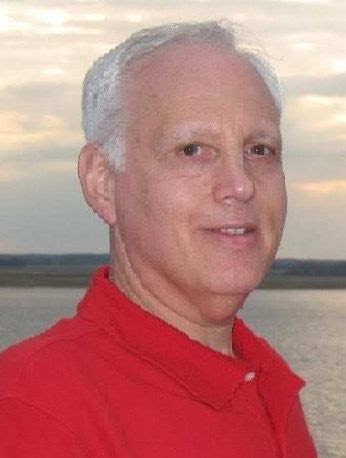
The APBD Research Foundation shares with sadness the passing of former Board Member David Epstein on January 3, 2026.
David served on our Board of Directors in the Foundation’s early years and later continued his involvement as a Director Emeritus, even after APBD required him to step back from his professional work. He was widely respected as a businessman, but he was even more cherished as a devoted husband, father, uncle, grandfather, and friend. Those who knew David remember not only his many contributions, but also his kindness, integrity, and generosity of spirit.
We extend our heartfelt thoughts, prayers, and deepest sympathy to the Epstein family and to all who loved and admired David.
| | Groundbreaking Research Updates | | |
Dr. Wyatt Yue (Newcastle University) describes a treatment approach for APBD that uses small molecules to target glycogen synthase, a protein that helps make glycogen. This protein works earlier in the process than the glycogen branching enzyme. By using this approach, the treatment aims to reduce the buildup of abnormal glycogen, called polyglucosan. This strategy is gaining interest among researchers studying APBD and related diseases, including Lafora disease and Pompe disease.
Read the Q&A
| |
University of Texas Southwestern Medical Center researchers Dr. Felix Nitschke and Dr. Mayank Verma -- along with Johns Hopkins/Kennedy Kreiger researcher Dr. Nirbhay Yadav -- share updates on their collaborative work to track disease changes more accurately. They are measuring and comparing several biological markers, including MRI scans that show glycogen buildup, to better understand how the disease progresses and to help prepare for future clinical trials.
Read the Q&A
| | Take Our BioBank Interest Survey! | | |
In November, the APBDRF announced the launch of our “GSD IV BioBank,” an exciting new research program aimed at accelerating the identification of biomarkers and drug development efforts. NOW, we are looking for APBD and early-onset GSD IV patients interested in providing biosamples as we build out this scientific tool. Take our survey to show your interest in scheduling a convenient home visit to collect your biosamples and support your GSD IV community!
Take the interest survey
| | From Community Responsibility to Clinical Progress: Advancing APBD Awareness at the Israeli American Council National Summit | | |
Golden Heart Flower (GHF) was one of five start-up finalists highlighted at the Israeli American Council (IAC) National Summit's Tech Session.
The IAC National Summit — held in Hollywood, Florida on Jan. 15-17, 2026 — drew over 4,000 participants from across the Israeli-American community. Among those in attendance were representatives from the APBDRF (Emil Weiss, co-founder and co-president) and Israel-based APBD patient organization MIFNEH (Uri Gabay, a volunteer and the son of a person living with APBD). Both supported the APBD awareness-building efforts.
The GHF team took the opportunity to bring visibility to APBD at a crucial time as they work to bring GHF-201 into clinical trials. GHF-201 is a small molecule therapy designed to reduce polyglucosan body accumulation — the underlying cause of key symptoms, including bladder dysfunction and progressive loss of mobility — in APBD patients. During the Summit's Tech Session, held in Shark Tank format, GHF's CEO Yaniv Glazer shared, "We're nearing the completion of our Phase I clinical trial in Europe to study GHF-201 in healthy adult volunteers. And we are preparing to initiate a clinical study with APBD patients in the third quarter of 2026."
GHF's Co-Founder and Chairman Shlomi Schneider shared, "We are currently raising investment to support the timely initiation of the next clinical study with APBD patients. The momentum generated at the IAC National Summit underscores the importance of community engagement in moving rare disease programs forward, particularly in areas where traditional funding pathways are limited."
| | Ami Magazine Puts the Spotlight on APBD | | |
We're excited to share that the latest edition of Ami Magazine's Ami Living Supplement features Barbara Tamir's diagnostic journey (using the name Bina T.). Barbara worked on this narrative with her friend and writer Devorie Kreiman. Together, they focused the storyline on how hard it is to get a rare disease diagnosis and on how becoming religious helped Barbara to handle the diagnosis.
In the article, Barbara shared, "In 2015, when I was in my mid-50s, I started having some issues with bladder control, which was a bit unsettling. The doctor told me it’s not uncommon for women who’ve had a bunch of children to suffer from it, and it could also be a function of aging. I did kegel exercises, and, for the most part, just learned to live with a dysfunctional bladder. I didn’t realize that it was a marker of something more ominous."
| | Editor’s Note: We are thankful to the writers and editors at “Ami Magazine” for putting the spotlight on APBD with Barbara’s personal narrative. Understanding the rare disease journey, recognizing the hallmarks of APBD, and connecting individuals and families affected with crucial resources are important aspects of this work to make APBD treatments a reality. Our thanks also to Barbara for stepping out and sharing her journey! | | |
The Foundation hosts talks, workshops, and scientific meetings for patients, caregivers, health professionals, and researchers. These programs connect our community members and deepen the understanding of how APBD impacts lives.
Patient Chat
Feb. 25, 2026 | 9am PT | 12pm ET
Topic: Why It's Important That You Participate in the GSD IV Biobank
Guest Speaker: Lindsay Gill, PhD | APBDRF - Research Manager
The hour will also include open mic time to discuss your discoveries, questions, and other thoughts.
This Chat is hosted by volunteer moderator Harriet Saxe. To learn more or register for this event, email Harriet at harriet@apbdrf.org.
Caregiver / Family Chat
Feb. 12, 2026 | 4:30pm PT | 7:30pm ET
This Chat is hosted by volunteer moderator Linda Cedarbaum. To learn more and register for this event, email Linda at linda@apbdrf.org.
| | We provide this FREE monthly newsletter resource to all of our GSD IV and allied disease community members. This resource is made possible by contributions to the APBD Research Foundation from donors like you. Thank You! | | | |


.gif)
.png)
.jpg)
.jpg)
.png)
.jpg)
.jpg)
.png)
.png)
.png)
.png)